TL;DR
A podcast room rental is the room, the microphones and the treatment, with nobody running the session for you. On Bali that costs Rp500k at VoxPop and Aya Studios and Rp600k for two hours at Villo Studio, as of April 2026, against Rp1.25M for the same room with an operator. Marketplaces abroad average $125 to $177 per hour for the same thing. Room-only is the right call if you have recorded before and can run your own levels. If this is your first episode, or you have a guest, pay for the operator.
A podcast room and a podcast studio are not the same booking
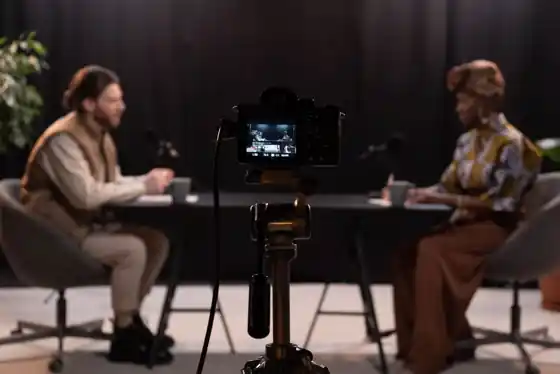
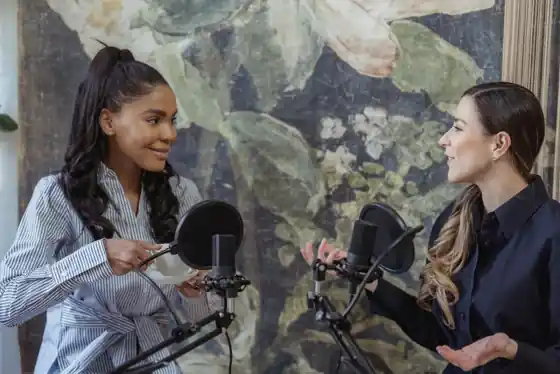
When a coworking space or a marketplace lists a 'podcast room', it means a treated room with microphones on the desk and nobody behind the glass. You walk in, plug in, press record, and walk out with your files. A 'podcast studio' booking on Bali usually means the same room plus a person: the operator who sets the levels, frames the cameras, watches the meters and hands you a clean multitrack at the end.
The price gap between the two is the whole subject of this guide. On Bali, room-only sits at Rp500k to Rp600k per session, while the operator-led version of the same room starts at Rp745k at VoxPop and Rp1.25M at Villo Studio, as of April 2026. That is a two-times difference for one person's time, and whether that person is worth it depends entirely on what you already know how to do.
Most listings blur the line on purpose. Venture X, the coworking chain that ranks first for this phrase, lists 'pro-grade microphones, an audio interface or mixer, headphones' and says equipment varies by location. Peerspace and Giggster show a photo, a capacity and an hourly rate. None of them says who is going to press record. On the island the answer is usually printed nowhere and settled on WhatsApp, which is why we wrote this down. If you want the full-service side of the decision, the rent podcast studio Bali guide covers it.
What a room-only rental actually includes on Bali
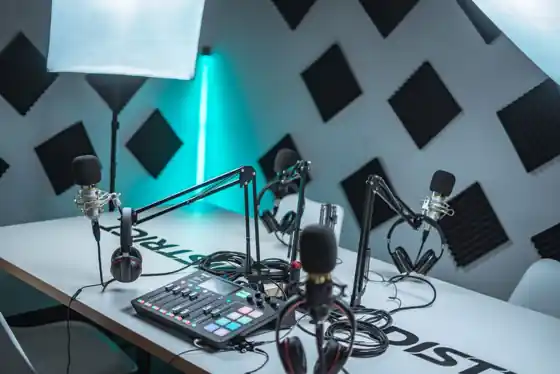
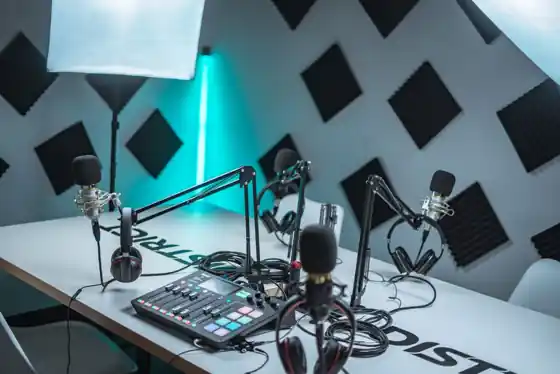
The honest list is shorter than the marketing one. A room-only podcast rental on Bali typically includes the room itself with acoustic treatment, two to four dynamic microphones on arms, an interface or a RØDECaster-class mixer, headphones for each seat, a table and chairs, and air conditioning that you will need to switch off while recording because the compressor is audible on a dynamic mic.
What it usually does not include: the operator, camera framing, lighting adjustment beyond 'the lights are on', a teleprompter, editing, a multitrack export prepared for you, and any recovery if a track was clipping for forty minutes and nobody noticed. Some rooms include cameras in the price, some charge per camera, some have cameras in the room that are not part of the room-only rate at all. Ask which.
The other thing you do not get is a second opinion. Villo Studio has 150 Google reviews, and 12 of them name the operator: Dam six times, Damir twice, Nara twice, Anton twice. Nobody writes a review about a room. People remember the person who noticed their guest's mic was pointing at the ceiling. In a room-only booking, that person is you, and if you are also the host, you are doing two jobs at once. It is doable. It is also the main reason first episodes recorded in rented rooms sound worse than the second ones.
Which Bali operators rent the room without the operator
Not every studio on the island offers a room-only rate, and the ones that do rarely publish it. From our calls in April 2026:
Villo Studio, Canggu. Rp600k for two hours without an operator. It is not on the website. You have to ask, and you will be asked whether you have done this before. Studio rent is 3.5% of Villo's revenue, so the room-only slot exists but the business is built around operator-led sessions. See the Villo Studio card for the full-service rates.
VoxPop Podcast Studio, Pererenan. Around Rp500k room-only. The operator-led rate starts at Rp745k for one camera, so the saving is Rp245k, smaller than at Villo. The VoxPop card has the camera tiers.
Aya Studios, Tabanan. Around Rp500k. The trade-off is the drive: Tabanan is 40 to 60 minutes from Canggu depending on the hour, and you are carrying your own SD cards back.
Creators Studio Bali, North Kuta. Rp600k for a one-camera session, and that is effectively a room-only rate because the operator is not part of it. This is the studio behind the 'cheapest on the island' line in every comparison, and it is cheap for exactly this reason.
Genesis Creative Centre, Hot Tea, ICON MEDIA, HypeHunters and On Air did not quote us a room-only rate. That does not mean they refuse. It means their published tiers are operator-led, and a self-run booking is a conversation, not a price list. Eight of the sixteen studios in our catalog sit in North Kuta, so if you are in Canggu, Pererenan or Kerobokan you have the most rooms to ask. The Canggu studios page lists them by district.
Room-only prices on Bali versus the marketplaces abroad

The numbers below are per session, not per hour, because Bali studios sell blocks. Prices collected by phone in April 2026; Villo from its published rates.
| Booking | Bali (session) | Roughly in USD | |---|---|---| | Room-only, VoxPop or Aya | Rp500k | $30 | | Room-only, Villo, 2 hours | Rp600k | $36 | | Creators Studio, 1 cam, no operator | Rp600k | $36 | | Operator-led, VoxPop, 1 cam | Rp745k | $45 | | Operator-led, Villo, 1 cam | Rp1.25M | $76 | | Operator-led, Villo, 2 cam | Rp1.55M | $94 | | Operator-led, HypeHunters, 3 cam | Rp3.8M | $230 |
For comparison, Peerspace lists an average of $125 per hour for podcast studios, with individual rooms from $40 to $350, and Giggster's New York page averages $177 per hour with a range from $19 to over $5,000. Those are mostly room-only listings too. The gap is not that Bali rooms are worse. It is that a treated room in Canggu costs the operator a fraction of what a treated room in Brooklyn costs, and the hourly rate follows the rent.
Two things move the Bali number. Season: October to March is peak and rates run about 50% above the off-season average, so a Rp600k slot in February may not be Rp600k in July, in your favour. And cameras: the moment you want the room's cameras rolling, most operators move you to a camera tier, and the room-only price stops applying. The full ladder is in the podcast studio rates guide.
What to bring and what to check before you press record
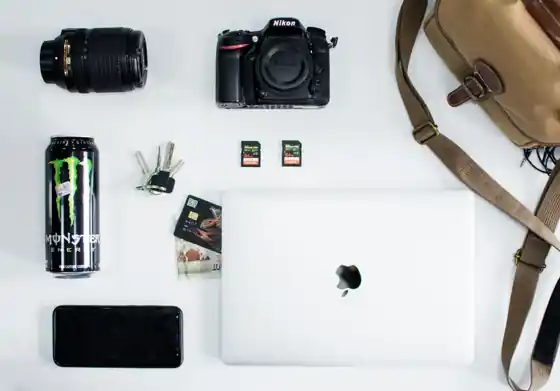
Bring your own SD cards or an SSD, and bring two. Rooms that include cameras rarely include media, and a card that fills up at minute 38 of a 60-minute episode is the most common self-run failure we hear about. Bring a laptop with the recording software you already know, in case the room's mixer is unfamiliar. Ask whether the guest wears glasses and pick the headphones accordingly. That sounds petty until it is 20 minutes into the session.
Check five things in the first ten minutes, before the guest sits down. One, record 30 seconds of silence and listen back on headphones: air conditioning, fridge, the road outside. Two, speak at your loudest and confirm the meter does not touch red. Three, confirm the mixer is recording multitrack, not a stereo mix, because you cannot un-mix a stereo file later. Four, if there are cameras, confirm they are recording to the card and not just showing a live picture. Five, ask where the file goes at the end and how you get it: card, USB, WeTransfer from the studio, and by when.
None of this is difficult. All of it is what the operator does without telling you, and it is what you are not paying Rp650k for when you choose room-only. Write the five checks on a card and tape it to the mixer. We are not joking about the tape.
Two-hour minimums and deposits are normal, not a warning sign
Peerspace's podcast rooms carry one-to-two-hour minimums, Giggster's carry similar terms, and most Bali rooms sell two-hour blocks with a deposit of Rp500k to Rp1M. Some people read that as the studio protecting itself against you. We read it the other way round. A room that lets you book 30 minutes at the full hourly rate is not being flexible. It is charging you an hour for half of one and calling it a feature.
A two-hour minimum is what a 45-minute episode actually takes once you add setup, the silence test, the guest arriving late from the Berawa traffic, and the ten minutes at the end when you realise the intro needs re-recording. The deposit is the studio's evidence that its calendar is real. In our calls, the operators that asked for Rp500k to Rp1M up front were the ones who also had a booking system that answered inside a day. The ones with no deposit were the ones whose slot was still 'probably available' the day before.
So the room-only red flags are different from the ones the marketplaces warn about. Watch for: a rate that is only given after you name your budget, a room-only price that quietly becomes a camera tier once you arrive, and a cancellation policy that lives in a WhatsApp message rather than on the booking. The two-hour block and the deposit are fine. They are the parts of the deal that protect you.
When not to rent the room, and book the operator instead
Do not book room-only for your first episode. The saving is about Rp650k at Villo, and the cost of a first episode that has to be re-recorded is the whole session plus your guest's patience. Book the operator once, watch what they do, then go room-only from the second session with a checklist you copied from them.
Do not book room-only if you have a guest you cannot easily get back. A visiting founder, a surfer in town for a week, a client flying out on Thursday. The operator is insurance on the one take you get. Podcast bookings are 21.6% of Villo's revenue and talking-head sessions are another 55.5%, and almost all of those are operator-led for exactly this reason.
Do not book room-only if you need video framing to look like the studios you see on YouTube. Three cameras, cutaways and consistent lighting are an operator's job, and the room-only rate at most Bali studios does not include cameras at all. If that is the format, the podcast studios on Bali category lists the operators by camera count.
And do not book a Bali room at all if you are not on the island. Peerspace and Giggster exist for a reason, and a treated room ten minutes from your desk beats a cheaper one on another continent. Room-only makes sense here for the people it was built for: creators who live in Canggu or Ubud, have recorded before, and want a treated room for the price of a decent lunch for four. For them it is the best deal in the catalog. For everyone else it is a cheaper way to record an episode twice.
Frequently asked
How much does a podcast room rental cost on Bali?+
Room-only, without an operator, runs about Rp500k per session at VoxPop and Aya Studios and Rp600k for two hours at Villo Studio, as of April 2026. Creators Studio Bali charges Rp600k for a one-camera session with no operator. The same rooms with an operator start at Rp745k and go to Rp1.25M for one camera.
What is included in a room-only podcast rental?+
The treated room, two to four microphones, an interface or mixer, headphones and a table. Cameras, lighting adjustment, a teleprompter, editing and a prepared multitrack export are usually not included. Ask specifically whether the room's cameras are part of the room-only rate, because at most Bali studios they are not.
Is a podcast room cheaper than a podcast studio with an operator?+
Yes, by roughly half on Bali. Villo Studio is Rp600k for two hours room-only against Rp1.25M for a one-camera operator-led session. The saving is real if you can run your own levels and check your own files. It disappears if a track clips and the episode has to be recorded again.
Do Bali studios publish their room-only rates?+
Rarely. Villo's Rp600k two-hour rate is not on its website, and VoxPop's and Aya's room-only prices came from phone calls. Most operators publish operator-led camera tiers and treat a self-run booking as a conversation. Ask directly and mention that you have recorded before.
What should I bring to a self-run podcast session?+
Two SD cards or an SSD, a laptop with recording software you know, and a written checklist. Record 30 seconds of silence and listen back, confirm the meters stay out of the red, confirm the mixer is recording multitrack, confirm any cameras are actually recording, and agree how you will receive the files before the guest sits down.
Why do podcast rooms have a two-hour minimum?+
Because a 45-minute episode takes about two hours once you add setup, a silence test, a late guest and a re-recorded intro. Peerspace rooms carry one-to-two-hour minimums for the same reason. A room that sells 30 minutes at the full hourly rate is the arrangement to be wary of, not the two-hour block.
Is a deposit normal for a podcast room rental?+
Yes. Rp500k to Rp1M up front is standard on Bali and usually comes off the final bill. In our calls, the studios that asked for a deposit were the ones with a real booking calendar. A room with no deposit and no cancellation terms is the one more likely to double-book your slot.
Can I rent a podcast room on Bali with cameras but no operator?+
Sometimes. Creators Studio Bali's Rp600k one-camera rate is effectively that. At Villo and VoxPop, switching the cameras on usually moves you to an operator-led camera tier. If you want the cameras and know how to run them, say so when you book, and confirm the price before you arrive.
Keyword cluster
About the author
Philippe Durand· Production Specialist
Independent producer based in Canggu since 2019. Spent the last six years inside Bali's video and podcast studios — first as a hired director, now reviewing them for Near Me. Full profile →
Ready to find a studio?
Browse our full catalog of 17+ Bali studios, or jump to the podcast category.